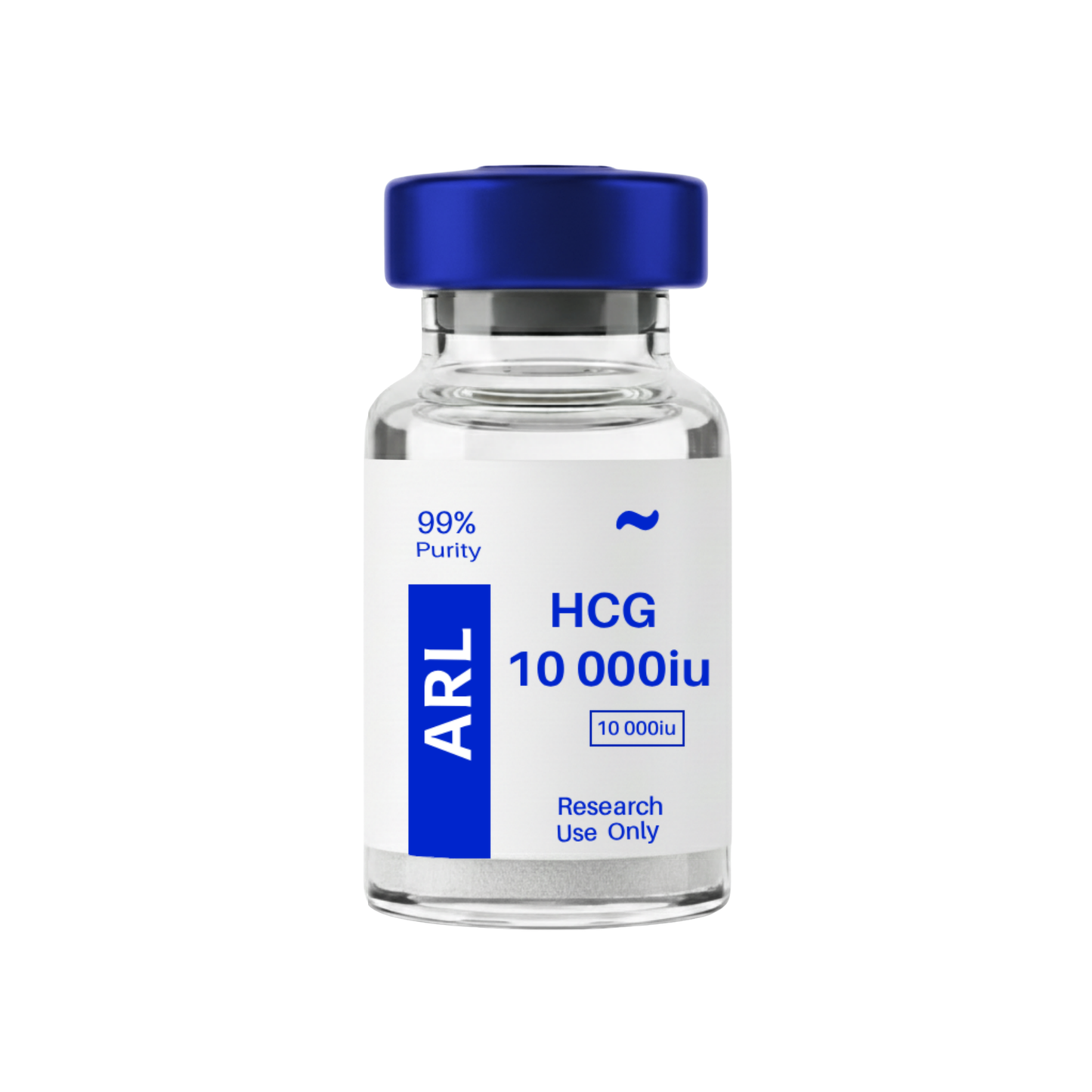
HCG
HCG
This batch of HCG Peptide has been third party lab tested and verified for quality.
Contents: HCG
Form: Powder
Purity: 99.3%
Couldn't load pickup availability
Free Reconstitution Solution automatically added to your cart with each order.
This product is Made, Tested & Shipped From Canada.
Ships Today
Order by 1:00 PM EST
Free Shipping
For 2 or more vials
Verified+

HCG: Biochemical Reference and Diagnostic Application Summary
Molecular Reference Parameters
Human chorionic gonadotropin (HCG) molecular specifications for diagnostic and research applications:
Molecular weight (heterodimer): 36.7 kDa
Alpha subunit: 10,205 Da
Beta subunit: 15,547 Da
CAS registry number: 9002-61-3
Chemical nomenclature: Human chorionic gonadotropin; Choriogonadotropin; hCG; Chorionic gonadotropin
Structural classification: Glycoprotein hormone; two-chain polypeptide; heterodimeric protein
Receptor Binding and Signal Characteristics
HCG demonstrates selective binding to luteinizing hormone/chorionic gonadotropin receptor (LHCGR), a G-protein coupled receptor expressed on:
Testicular Leydig cells (testosterone production)
Ovarian granulosa and theca cells (steroid production and follicular maturation)
Corpus luteum cells (progesterone synthesis)
Signal transduction: cAMP-dependent pathway activation
Downstream effectors: Protein kinase A (PKA), steroidogenic factor 1 (SF-1), CREB phosphorylation
Comparative Pharmacokinetic Profile
HCG demonstrates extended biological activity relative to luteinizing hormone:
Native LH half-life: Approximately 30 minutes
HCG half-life: 24-48 hours (varies with glycosylation, formulation, and individual factors)
Extended half-life advantage: Supports sustained receptor activation suitable for therapeutic and diagnostic applications
Serum protein binding: HCG demonstrates increased protein binding contributing to extended circulating persistence
Ovulation and Reproductive Applications
Female Reproductive System Applications
Oocyte maturation completion timing: Administered during late follicular phase
Trigger mechanism: Completes meiosis I, initiates cumulus expansion, triggers oocyte extrusion
Timeline to ovulation: Approximately 36-40 hours post-injection
Luteal phase support: Sustains corpus luteum progesterone production during early pregnancy
Clinical dosage range: 5,000-10,000 IU for ovulation triggering
Testosterone Production Support
Male Reproductive System Applications
Mechanism: LHCGR activation on testicular Leydig cells
Primary effect: Stimulates testosterone biosynthesis through cAMP-dependent pathway upregulation of steroidogenic enzymes
Secondary effects: Supports spermatogenesis through elevated intratesticular testosterone
Clinical applications: Hypogonadism management, spermatogenesis support, testosterone restoration
Dosage range: Variable by indication and individual response (typically 500-2,000 IU three times weekly)
Diagnostic Applications and Reference Ranges
HCG Measurement for Diagnostic Purposes
Non-pregnant individuals: Less than 5 mIU/mL
Early pregnancy (week 3): 5-50 mIU/mL
Week 4 pregnancy: 10-1,000 mIU/mL
Week 5 pregnancy: 1,000-50,000 mIU/mL
Weeks 6-8 pregnancy: 10,000-100,000 mIU/mL
Peak HCG (weeks 10-12): 50,000-100,000 mIU/mL
Post-miscarriage: Progressive decline to baseline over 2-6 weeks
Tumor marker applications: Elevated HCG indicates trophoblastic disease, germ cell tumors
Thyroid Effects and Cross-Reactivity
Thyroid-Related HCG Effects
Threshold for thyroid effects: Greater than 100,000 mIU/mL
Mechanism: Structural homology with thyroid-stimulating hormone (TSH) enables TSH receptor cross-reactivity
Clinical manifestation: Gestational thyroiditis with suppressed TSH and elevated free thyroid hormones
Gestational transient thyroiditis: Occurs in approximately 10% of pregnancies with extremely elevated HCG
Thyroid monitoring: Indicated when HCG concentrations exceed 1,000,000 mIU/mL
Weight Management and Body Composition: Scientific Assessment
Weight Management Efficacy Evidence
Clinical studies: Randomized controlled trials consistently demonstrate no independent HCG weight loss effect
Meta-analytic findings: HCG produces equivalent weight loss to diet-only controls
Mechanism assessment: Weight changes attributable exclusively to caloric deficit, not HCG pharmacology
Professional organization position: No endorsement for weight management indication
Current evidence rating: Insufficient evidence to support clinical use for weight management
Assay Technologies and Measurement Methods
HCG Detection Technologies
Immunoassay platforms: ELISA, radioimmunoassay, chemiluminescence
Serum measurements: Standard clinical application for pregnancy detection, tumor screening
Urine measurements: Home pregnancy testing, clinical confirmation
Point-of-care testing: Rapid pregnancy confirmation devices
Quantitative versus qualitative: Quantitative measurement supports clinical management decisions
Assay sensitivity: Modern assays detect HCG at concentrations as low as 1-5 mIU/mL
Immunoassay Format Considerations
Two-site sandwich assays: Capture and detection antibodies targeting different HCG epitopes
Signal amplification: Enhanced sensitivity through chemiluminescence, electrochemiluminescence, or enzyme-linked detection
Automation compatibility: Assay design supporting high-throughput clinical laboratory processing
Stability testing: Extended shelf-life through optimized reagent formulations and storage conditions
Quality control parameters: Precision, accuracy, and linearity across clinically relevant concentration ranges
Cross-Reactivity and Specificity Considerations
Structural Cross-Reactivity Issues
Glycoprotein hormone family homology: Shared alpha subunit structure with LH, FSH, TSH
Beta subunit specificity: Unique HCG beta subunit confers receptor selectivity
Assay design considerations: Monoclonal antibodies targeting unique beta subunit ensure specificity
Cross-reactivity testing: Important for assay validation in clinical and research contexts
Immunologic responses: Potential for human anti-animal antibody formation with certain assay formats
Assay Validation Parameters
Sensitivity: Minimum detectable concentration for reliable HCG identification
Specificity: Ability to distinguish HCG from structurally similar glycoprotein hormones
Interference testing: Assessment of potential interference from rheumatoid factor, hemoglobin, bilirubin, lipemia
Matrix effects: Evaluation of assay performance across diverse biological matrices (serum, urine, other body fluids)
Analytical recovery: Verification of assay accuracy across concentration range
Emerging Diagnostic Applications
Research and Development Applications
Liquid biopsy integration: HCG measurement in circulating tumor cell assessment
Prenatal screening: HCG as component of first-trimester combined screening algorithms
Tumor monitoring: Serial HCG measurement for therapy response assessment in germ cell cancers
Precision medicine integration: HCG as biomarker within multi-parameter diagnostic algorithms
Non-invasive prenatal testing: HCG consideration within cell-free DNA and RNA-based screening platforms
Clinical Laboratory Operations
Sample Collection and Handling
Collection tube requirements: Serum separator tubes or EDTA plasma for HCG measurement
Sample storage: Stability parameters for various storage temperatures and timeframes
Pre-analytical variables: Factors affecting HCG measurement accuracy including hemolysis, lipemia, sample integrity
Chain-of-custody documentation: Laboratory information system integration and specimen tracking
Turnaround time considerations: Stat versus routine processing capabilities
Result Reporting and Interpretation
Reference interval establishment: Laboratory-specific reference range validation
Critical value notification: Protocols for reporting extremely elevated or unexpected HCG results
Delta checking: Comparison of current results with previous measurements to identify analytical or biological changes
Reflex testing: Algorithms for automatic follow-up testing based on initial HCG results
Physician notification procedures: Communication protocols for abnormal or clinically significant results
Regulatory and Compliance Framework
Clinical Laboratory Improvement Amendments (CLIA) Requirements
Personnel qualifications: Laboratory director, technical supervisor, and analyst certification requirements
Quality control specifications: Daily, weekly, and monthly quality control procedures
Proficiency testing: Participation in external proficiency testing programs for HCG measurement
Documentation requirements: Maintenance of quality records, calibration logs, and personnel files
Inspection and accreditation: Compliance with CLIA regulatory standards and accreditation body requirements
FDA Regulatory Pathway
Premarket notification (510(k)): Submission requirements for novel HCG assay platforms
In vitro diagnostic classification: Risk stratification and performance standards for HCG diagnostic devices
Analytical validation: Demonstration of accuracy, precision, and analytical sensitivity/specificity
Clinical validation: Evidence supporting clinical utility and appropriate interpretation of results
Instrumentation and Platform Considerations
High-Volume Laboratory Automation
Throughput capability: Assays processing 200-800 samples per hour
Integrated workflow: Specimen handling, reagent management, result reporting within single platform
Connectivity: Bidirectional LIS interface with automatic result transmission
Preventive maintenance: Scheduled maintenance intervals and parts availability
Training and support: Manufacturer technical support and operator training programs
Point-of-Care Testing (POCT) Platforms
Rapid turnaround: Results available within 5-15 minutes
Minimal sample volume: Capillary blood, urine, or serum in small quantities
User-friendly operation: Minimal training requirements for non-laboratory personnel
Quality assurance: Built-in quality control and result validation mechanisms
Connectivity options: Wired or wireless transmission of results to medical records systems
Quality Metrics and Performance Monitoring
Analytical Performance Metrics
Accuracy: Degree of HCG measurement agreement with reference standard
Precision: Reproducibility of HCG measurements across multiple assays
Sensitivity: Ability to detect low HCG concentrations
Specificity: Ability to identify true HCG-positive samples
Positive and negative predictive values: Clinical utility of positive and negative test results in specific populations
Operational Performance Metrics
Turnaround time: Time from specimen receipt to result reporting
Error rate: Frequency of analytical or reporting errors
Instrument uptime: Percentage of time instrument operates without malfunction
Sample rejection rate: Frequency of samples rejected due to quality issues
Customer satisfaction: Clinical provider and patient satisfaction with testing service
Future Technologies and Innovation
Next-Generation Assay Development
Immunoassay alternatives: Surface plasmon resonance (SPR), electrochemical impedance spectroscopy (EIS)
Molecular diagnostic integration: HCG as component within comprehensive multiplexed hormone panels
Artificial intelligence applications: Machine learning algorithms for result interpretation and clinical decision support
Point-of-care miniaturization: Microfluidic devices and lab-on-chip technologies
Home testing expansion: Consumer-accessible HCG measurement with smartphone connectivity
Competitive Landscape and Market Analysis
Major HCG Assay Providers
Established manufacturers: Roche Diagnostics, Abbott Diagnostics, Siemens Healthineers
Regional competitors: Accesso, Sekisui Diagnostics, Radiometer
Emerging technologies: Novel platforms emphasizing rapid turnaround or point-of-care capabilities
Market share distribution: Segment analysis across hospital, reference laboratory, and POCT settings
Differentiation Strategies
Performance advantages: Superior sensitivity, specificity, or turnaround time
Cost efficiency: Reduced reagent costs and operational expenses
Ease of use: Simplified workflows and minimal operator training
Connectivity features: Integration with existing laboratory information systems
Regulatory recognition: Approvals and certifications from major regulatory bodies
Research Attribution and Industry Acknowledgment
Dr. Peter Humaidan, M.D., Ph.D. synthesized scientific and technical literature informing this diagnostic and industry reference summary. Dr. Humaidan's extensive expertise in reproductive endocrinology has contributed substantially to understanding HCG applications across clinical and research contexts. His collaborative research with distinguished colleagues has advanced the scientific foundation supporting HCG diagnostic and therapeutic applications.
This technical summary acknowledges Dr. Humaidan's scientific contributions to reproductive medicine and endocrinology. This document does not constitute endorsement of any commercial diagnostic platform or device. Montreal Peptides Canada maintains institutional independence and has no business relationship with Dr. Humaidan or diagnostic manufacturers.
REFERENCED SCIENTIFIC LITERATURE
- Humaidan P, Alsbjerg B. GnRHa trigger for final oocyte maturation: is HCG trigger history? Reprod Biomed Online. 2014;29(3):274-280 rbmojournal.com.
- Coviello AD, Matsumoto AM, Bremner WJ, et al. Low-dose human chorionic gonadotropin maintains intratesticular testosterone in normal men with testosterone-induced gonadotropin suppression. J Clin Endocrinol Metab. 2005;90(5):2595-2602 pubmed.ncbi.nlm.nih.gov.
- Fink J, Schoenfeld BJ, Hackney AC, et al. Human chorionic gonadotropin treatment: a viable option for management of secondary hypogonadism and male infertility. Expert Rev Endocrinol Metab. 2021;16(1):1-8 pubmed.ncbi.nlm.nih.gov.
- Lee JA, Ramasamy R. Indications for the use of human chorionic gonadotropic hormone for the management of infertility in hypogonadal men. Transl Androl Urol. 2018;7(Suppl 3):S348-S352 imcwc.com.
- Habous M, Giona S, Tealab A, et al. Clomiphene citrate and human chorionic gonadotropin are both effective in restoring testosterone in hypogonadism: a short-course randomized study. BJU Int. 2018;122(5):889-897 tau.amegroups.org.
- Liu PY, Wishart SM, Handelsman DJ. A double-blind, placebo-controlled trial of recombinant human chorionic gonadotropin in older men with partial age-related androgen deficiency. J Clin Endocrinol Metab. 2002;87(7):3125-3135 tau.amegroups.org.
- ClinicalTrials.gov. Efficacy and Safety of Long Term Use of hCG or hCG Plus hMG in Males With Isolated Hypogonadotropic Hypogonadism (IHH). (Tongji Hospital study NCT03687606) centerwatch.com.
-
check_circle
HIGHEST QUALITY PEPTIDES
Our products are scientifically formulated and manufactured in cGMP-compliant facilities.
-
encrypted
FAST DELIVERY
Enjoy fast and reliable 3–5 day shipping.
-
check_circle
Dedicated Customer Service
Our customer service team is highly knowledgeable in peptide research and its applications. We’re available 24/7 to assist you.
Verified reviews
Tested. Verified. Trusted.
We take a laboratory-first approach to quality. Each batch is made under controlled conditions and verified by an independent lab (HPLC/MS). We only ship batches that test ≥99% purity, and we provide a full COA, including identity, methods, and chromatograms, for your review.
You may also like
-
SAVE 25%Tirzepatide
Regular price From $50.00Regular price From $50.00 Sale priceUnit price / per$67.0025% -
SAVE 24%Thymosin Alpha-1
Regular price From $79.00Regular price From $79.00 Sale priceUnit price / per$104.0024% -
SAVE 23%Tesamorelin
Regular price From $80.00Regular price From $80.00 Sale priceUnit price / per$105.0023% -
SAVE 23%Survodutide
Regular price $299.00Regular price $299.00 Sale priceUnit price / per$392.0023% -
SAVE 26%Sterile Water
Regular price From $14.00Regular price From $14.00 Sale priceUnit price / per$19.0026% -
SAVE 23%SLU-PP-332
Regular price $125.00Regular price $125.00 Sale priceUnit price / per$164.0023% -
SAVE 23%Sermorelin
Regular price From $70.00Regular price From $70.00 Sale priceUnit price / per$92.0023% -
SAVE 23%Semaglutide
Regular price From $36.00Regular price From $36.00 Sale priceUnit price / per$47.0023% -
SAVE 23%Retatrutide Triple Agonist
Regular price From $90.00Regular price From $90.00 Sale priceUnit price / per$118.0023% -
SAVE 26%Oxytocin Acetate
Regular price $42.00Regular price $42.00 Sale priceUnit price / per$57.0026% -
SAVE 25%Melanotan II (MT2)
Regular price $50.00Regular price $50.00 Sale priceUnit price / per$67.0025% -
SAVE 23%Lemon Bottle
Regular price $80.00Regular price $80.00 Sale priceUnit price / per$105.0023% -
SAVE 24%KPV Tripeptide
Regular price From $56.00Regular price From $56.00 Sale priceUnit price / per$74.0024% -
KLOW Blend - GHK-CU + TB-500 + BPC-157 + KPV 10mg
Regular price $200.00Regular price $200.00 Sale priceUnit price / per$261.0023% -
SAVE 23%Kisspeptin-10
Regular price From $65.00Regular price From $65.00 Sale priceUnit price / per$85.0023% -
SAVE 23%Ipamorelin
Regular price From $32.00Regular price From $32.00 Sale priceUnit price / per$42.0023% -
SAVE 24%IGF-1 LR3 (Long R3)
Regular price From $40.00Regular price From $40.00 Sale priceUnit price / per$53.0024% -
SAVE 24%Hyaluronic Acid
Regular price $28.00Regular price $28.00 Sale priceUnit price / per$37.0024% -
SAVE 23%HGH Fragment 176-191
Regular price $97.00Regular price $97.00 Sale priceUnit price / per$127.0023% -
SAVE 23%HGH 191AA (Somatropin)
Regular price From $55.00Regular price From $55.00 Sale priceUnit price / per$72.0023% -
SAVE 25%Gonadorelin
Regular price $50.00Regular price $50.00 Sale priceUnit price / per$67.0025% -
SAVE 23%Glow BPC-157 + GHK-CU + TB-500
Regular price $139.00Regular price $139.00 Sale priceUnit price / per$181.0023% -
SAVE 25%Epitalon (Epithalon)
Regular price From $50.00Regular price From $50.00 Sale priceUnit price / per$67.0025% -
SAVE 24%Dermorphin
Regular price $56.00Regular price $56.00 Sale priceUnit price / per$74.0024% -
SAVE 23%CJC-1295 with DAC
Regular price $139.00Regular price $139.00 Sale priceUnit price / per$182.0023% -
SAVE 23%CJC-1295 No DAC & Ipamorelin
Regular price $95.00Regular price $95.00 Sale priceUnit price / per$124.0023% -
SAVE 23%CJC-1295 (No DAC)
Regular price From $75.00Regular price From $75.00 Sale priceUnit price / per$98.0023%
Every vial we sell comes from a lab that follows current Good Manufacturing Practices (cGMP). That means each step of production is documented and controlled. Before a batch is released, it’s tested by independent third-party labs for purity, identity, and sterility. Certificates of analysis are available so you can see the exact test results.
Yes. The labs we work with use ISO-certified clean rooms where air quality, equipment, and handling procedures are tightly regulated. Staff are trained to pharmaceutical-grade standards. This ensures the peptides are produced in an environment that minimizes contamination risks.
Peptides in lyophilized (freeze-dried) form are stable at room temperature for transport. Once you receive them, refrigeration is recommended to maintain long-term integrity. We package every order securely to prevent damage and ship promptly, so your vials arrive in optimal condition.
We operate under strict in-house protocols that follow current Good Manufacturing Practices (cGMP). That means our team oversees the entire process from sourcing raw amino acids to the final lyophilized vial. Nothing is outsourced or repackaged. This gives us full control over purity, consistency, and sterility, and it’s why we can stand behind every single vial we ship.
Store them in the refrigerator, away from direct light and heat. If you need to keep them longer, some peptides can be stored frozen. Each vial comes with clear handling instructions so you know the proper conditions for stability.
The strongest proof is transparency. For every peptide, we can provide certificates of analysis, manufacturing documentation, and references to the published scientific research behind it. If you ever have questions, we’ll show you the data rather than ask you to take our word for it.
The difference is transparency. Most sites give you a product name and a price. We provide full batch testing, lab documentation, and direct access to certificates of analysis so you don’t have to guess what you’re getting. When you order from us, you know exactly what’s in the vial, where it was made, and how it was verified.